Felesto LOG BOWL | About Natural Wood
Felesto / earth- & pet- friendly
LOG BOWL
Living with the time it took for the tree to grow.
Felesto’s LOG BOWL is crafted by utilizing natural logs as much as possible. The land where the tree grew, its species, growth rings, knots, color, and shape are unique to each piece. This page is designed to help you understand the background of your one-of-a-kind bowl, rather than hiding these differences as flaws, so you can cherish it for years to come.
WOOD & ORIGIN
7 LOG BOWLs and their Wood
No two logs share the same appearance as the ones in the photos. We will introduce them in order of product photo, name, wood species/origin, and the appeal of the material.

Simple Hinoki
Wood Species: Yoshino Hinoki (Japanese Cypress) | Origin: Yoshino
Yoshino is a representative forestry region in Japan with a long history. Trees have been cultivated over time through traditional methods of dense planting, frequent thinning, and long-term harvesting. Yoshino Hinoki is known for its fine and uniform growth rings, beautiful grain, straight trunks, and excellent durability, color, and luster. We have crafted this bowl to showcase the refined appearance of the log itself.

Art-processed Hinoki
Wood Species: Yoshino Hinoki (Japanese Cypress) | Origin: Yoshino
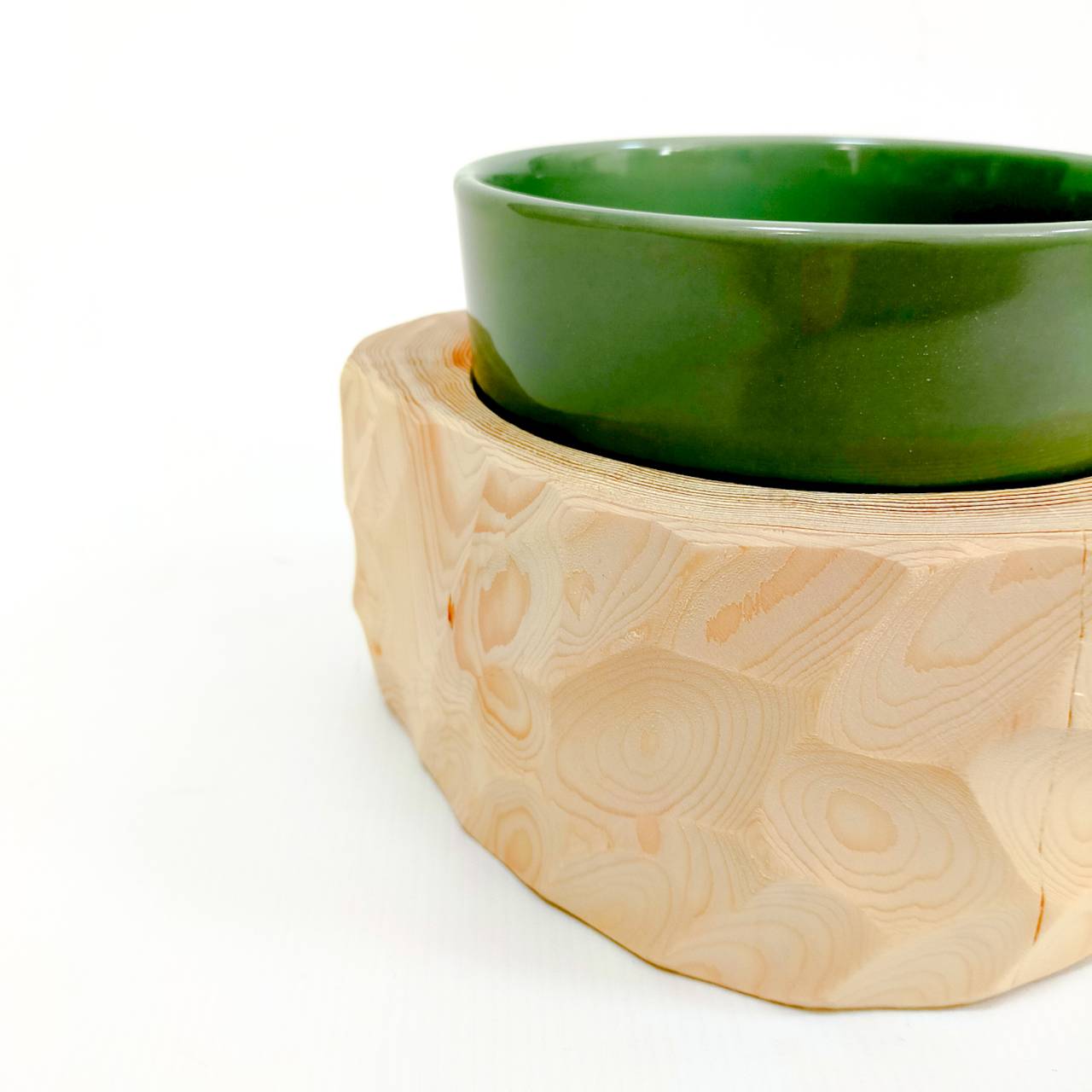
Made from Yoshino Hinoki, known for its fine growth rings and beautiful grain. We shape each bowl by examining the contours, grain, and knot positions of the log, highlighting the curves created by the material itself like a work of art. This style allows you to enjoy the luster of Yoshino Hinoki and the fascination of natural wood where no two shapes are the same.

Fresh Koyamaki (Japanese Umbrella Pine)
Wood Species: Koyamaki
The appeal lies in its bright, clear wood surface and the gentle, natural fragrance of the wood. We have fashioned Koyamaki, which is considered water-resistant and durable, into a clean appearance that highlights the log's grain and knots.

Share Koyamaki
Wood Species: Koyamaki | Origin: Kurotaki Village, Nara Prefecture
This series utilizes the irregular contours created by the hard core left behind after the exterior has weathered in nature. You can enjoy the unique scenery of each piece, from the bumps and variations in color to the knots and voids formed over a long time. The Koyamaki from Kurotaki Village displays natural, organic contours and wood surfaces. We have purposely left these unique characteristics intact to create a LOG BOWL you can enjoy in your daily life.

Wabi-Sabi Koyamaki
Wood Species: Koyamaki | Origin: Kurotaki Village, Nara Prefecture
Using Koyamaki from Kurotaki Village, Nara, this series features both the bright wood surface of the "Fresh" version and the weathered texture of the "Share" version. Smooth grain coexists with knots, bumps, and color variations in a single log. It is a piece that allows you to feel the passage of time etched into the wood while enjoying the time you will spend together in the future.

Art-processed Koyamaki (M)
Wood Species: Koyamaki | Origin: Kurotaki Village, Nara Prefecture | Log Only (M)
A type where the log itself has been refined like a work of art, while observing the unique contours and grain of the Koyamaki. This "Log Only" product can be combined with a bowl you already own. We have utilized the unique wood surface and the individual expressions of the Koyamaki from Kurotaki Village, combining natural forms with manual craftsmanship.

Cedar Shibori-maruta
Wood Species: Yoshino Sugi (Cedar) | Origin: Yoshino | Material: Shibori-maruta
Yoshino Cedar is known for being cultivated over time with dense planting, frequent thinning, and long-term harvesting, resulting in fine growth rings and beautiful grain. The Yoshino region has a long-standing culture of creating polished logs and "Shibori-maruta" (squeezed/compressed logs). We have brought this traditional log culture to pet products. We have kept the unique natural contours and the distinct appearance of each individual squeezed log.
NATURAL WOOD NOTES
Things to Know About Natural Wood
The appearance of a log is also a record of the time the tree grew and the process of it adapting to the current environment while drying. We introduce actual examples in detail so you can compare them with the product in your hands.

01
Cracks
As logs shrink during the drying process, deep, large cracks like the one in the photo may occur. You might notice cracks upon arrival. The degree of cracking varies from piece to piece. Cracks may widen or new ones may appear during use. Please understand in advance that this is a natural property of logs influenced by seasons, room temperature, humidity, and air conditioning.

02
Insect Holes
Natural logs may have small insect holes left from the tree's growing process. At Felesto, we verify this with lumberyards and keep the wood in our workshop for a while to ensure no insects emerge before we manufacture and sell the products. The presence of a small hole does not mean there are insects inside the wood currently.

03
Hinoki Oil
With Hinoki logs, the tree's natural oil can seep to the surface, appearing like brown to amber stains. Generally, the more oil that seeps out, the stronger the scent. It may leave residue on the floor, so please use a mat or cloth underneath if you are concerned. This type of oil is rarely seen in Koyamaki.

04
Blue Stain
In Koyamaki, blue to gray shades like those in the photo can appear over a large area. This is not dirt or paint, but a change in the wood's color. The intensity and spread of the color vary by piece. Please enjoy the unique look of the wood surface by comparing your log with the photo.
CARE GUIDE
Living with your LOG BOWL
Natural logs gradually adapt to the humidity and temperature of their environment. By avoiding sudden changes, preventing prolonged exposure to moisture, and performing small daily checks, you can enjoy the unique character of the wood for years to come.
Daily Care
Gently wipe away dust or food spills with a soft, dry cloth. By not leaving dirt or moisture on the surface for long periods, you can minimize changes to the wood's texture. Please check with Felesto before using any detergents, disinfectants, or oils.
If it Gets Wet
Remove the glass bowl and wipe off any moisture promptly with a dry cloth. Afterward, allow it to air dry naturally in a well-ventilated, shaded area to ensure no dampness remains. Leaving it wet can lead to changes in color or the wood surface.
Humidity and Placement
Avoid areas where humidity tends to gather, and check the bottom surface or the area where it touches the floor periodically. Placing it in an environment with good air circulation helps prevent moisture from getting trapped.
Dryness, Air Conditioning, and Heating
Avoid placing the bowl in spots where it is continuously exposed to direct air from air conditioning or heating. Sudden drying can accelerate wood shrinkage, which may cause new cracks or widen existing ones.
Direct Sunlight
Avoid areas exposed to strong, direct sunlight for long periods. If heat and dryness become concentrated in one area, it can change the wood's color and moisture level, potentially leading to cracks or warping.
Hinoki (Cypress) Oil
If oil surfaces, please wipe it off gently with a dry cloth. If you are concerned about it staining your floor, please use a mat or protective covering. If the surface becomes very sticky or you are unsure how to handle it, please consult Felesto.
Storage
Remove dirt and moisture, ensure it is thoroughly dry, and store it in a well-ventilated area away from direct sunlight. If you need guidance regarding materials or methods for sealing or long-term storage, please check with Felesto.
Repairs and Concerns
Please consult Felesto before attempting any sanding, gluing, or finishing on your own. If you are concerned about stability due to cracks or warping, please contact us with photos showing the current condition before continuing use.
One tree, one life.
Treating wood not just as a uniform material, but as a living element with its own history and personality. Getting to know its character as you use it and caring for it throughout your life together. This is what drives Felesto’s earth- & pet-friendly craftsmanship.
Felesto